
Why soft skills are the deciding factor in 2026 hiring
In 2026, the most expensive hiring mistakes Indian companies make are not about technical skills. The candidate could pass every coding round, every Excel test, every product-sense interview — and still fail in the first ninety days because they could not write a clear email, hold a difficult conversation, take feedback well, or manage their own time across competing priorities. This is the soft-skills layer of hiring, and it has quietly become the single biggest predictor of post-hire performance and retention.
A soft skills assessment is the structured way HR teams measure this layer before an offer is extended — and the structured way candidates can prove they have what the role actually needs, beyond what a resume can show. The shift from “we’ll evaluate soft skills in the interview” to “we’ll measure them with a designed instrument” is one of the most important changes happening in Indian hiring right now.
This guide is for both sides of that hiring conversation. We will walk through what a soft skills assessment is, how it works, the eight skills that show up most often in modern frameworks, how HR teams should design and use these assessments, and how candidates can prepare to perform well on them. By the end you will have a clear, practical picture of where soft skills assessment fits in 2026 hiring — and how GroYouth’s GY SAT is built to deliver it.
What is a soft skills assessment?
A soft skills assessment is a structured, repeatable measurement of the behavioural, interpersonal, and self-management skills that allow a person to perform well in a workplace. Unlike technical or hard-skills tests — which measure what a person knows or can do with a specific tool — a soft skills assessment measures how a person thinks, communicates, collaborates, learns, and recovers from setbacks.
A good soft skills assessment combines three measurement layers. The first is self-reported behaviour — typically a psychometric questionnaire that asks the candidate how they would behave in specific workplace situations. The second is scenario-based judgement — situational judgement test (SJT) items that present a realistic workplace scenario and ask the candidate to rank or choose the most effective response. The third is observable performance — short tasks, written responses, or AI-mediated mock interviews that surface communication, structure, and emotional regulation in real time.
Used together, the three layers produce a profile that is much harder to fake than a resume, much more consistent than an unstructured interview, and much more predictive of on-the-job performance than any single measure on its own. That triangulated approach is what separates a credible soft skills assessment from a checklist.
The 8 soft skills employers test for in 2026
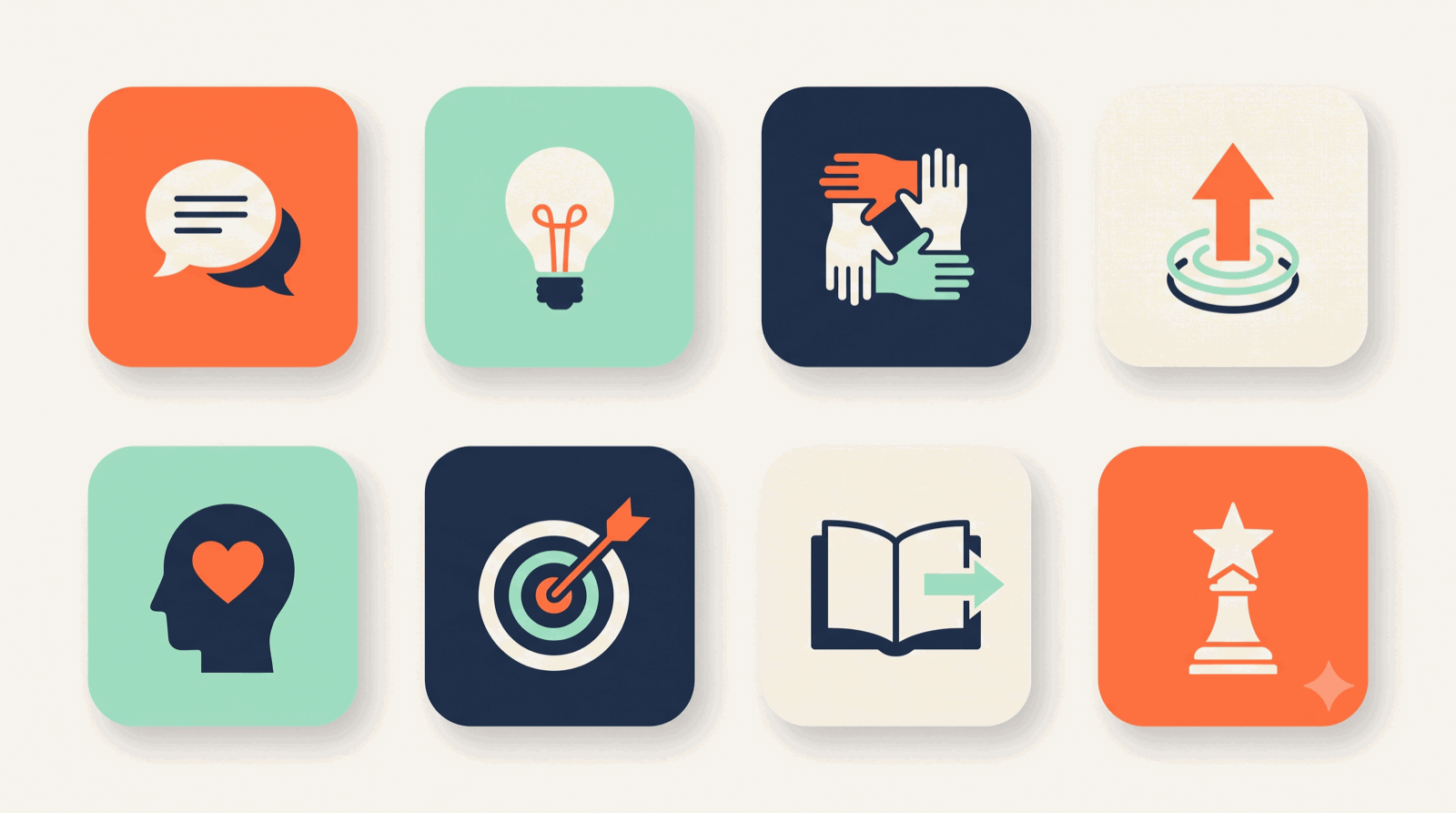
A decade of employability research from NSDC, NASSCOM, the India Skills Report, and Wheebox has converged on the same short list of soft skills that show up across industries, role levels, and geographies. The exact weighting changes by sector — banks weight EQ heavily, IT services weight learnability, consulting weights structured communication — but the list itself stays remarkably stable. (National Skill Development Corporation)
1. Workplace communication
The single most cited gap. Not English fluency, but the ability to write a clear structured email, run a meeting with an agenda, present an update in three sentences instead of fifteen, ask precise questions, and disagree without being defensive. Assessed through written response prompts, structured interview answers, and SJT items on stakeholder communication.
2. Critical thinking and problem-solving
The ability to find a workable answer when there is no method that was taught. Assessed through case-style prompts that ask the candidate to break down an ambiguous problem, identify trade-offs, and recommend a path with reasoning.
3. Collaboration and teamwork
Real workplace teamwork — negotiating ownership, handling disagreement, supporting a teammate who is behind, working asynchronously across locations. Assessed through SJTs on team conflict, role overlap, and credit-sharing.
4. Adaptability and learnability
The ability to learn new tools, processes, and contexts quickly. Increasingly the highest-weighted soft skill in 2026 because the half-life of every technical skill is shrinking. Assessed through pattern-recognition tasks and self-report scales on novelty tolerance.
5. Emotional intelligence
Reading a room, managing your own reactions when you are frustrated, giving feedback without making the other person defensive, and absorbing feedback without getting hurt. Assessed through scenario-based items where the candidate identifies the emotional dynamics of a workplace situation and chooses an appropriate response.
6. Ownership and accountability
Treating the outcome of your work as yours — including the parts that go wrong — and communicating proactively when there are problems. Assessed through behavioural prompts that probe how the candidate has handled past missed deadlines or quality issues.
7. Learnability (treated separately from adaptability)
The deliberate habit of seeking out feedback, building self-improvement loops, and learning from people senior to you. Closely related to adaptability but measured separately because it is the strongest predictor of long-run career growth.
8. Leadership and influence
Even at the entry level. The ability to influence peers, run a meeting, take initiative without being asked, and earn the trust of teammates and managers. Assessed through SJTs and structured interview probes on past leadership moments.
How a soft skills assessment actually works
A modern soft skills assessment runs as a single integrated test session, typically 30 to 60 minutes long, that the candidate completes online before the first human interview round. The session interleaves the three measurement layers — self-report, scenario judgement, and observable performance — so that no one layer dominates.
Behind the scenes, the assessment scores against a role-aligned competency framework. The same candidate’s performance is interpreted differently for a sales role versus an analyst role versus an HR role, because each role weights the eight skills differently. The output is a multi-dimensional profile — not a single pass-fail score — that hiring managers can use alongside the technical test, the resume, and the interview.
The best modern soft skills assessments also include an AI-led behavioural interview component that evaluates communication, clarity, and confidence in real time. This addresses the biggest weakness of paper-based psychometric tests — that they over-index on what a candidate says they would do, rather than what they actually do under pressure. Tools like GroYouth’s GY FIT bring this real-time observable layer into the assessment workflow.
For HR teams: how to build or buy a soft skills assessment
If you are an HR leader or talent acquisition manager designing a soft skills assessment for your hiring process, three decisions matter most.
The first is role-alignment. A soft skills assessment is only useful if it is calibrated to the role’s actual behavioural demands. The skills that matter for a customer-success role are different from the skills that matter for a back-end engineer. Before you buy or build, get clear on the top three to five soft skills that predict success in the role you are hiring for. Do this by interviewing your existing high performers in the role and asking what they do differently from average performers.
The second is screening sequence. The cheapest soft skills assessment in your funnel is the one that runs before the first human interview. The goal is to reduce the number of unqualified candidates who consume manager time. A well-designed pre-hire psychometric + SJT assessment can typically remove the bottom 30 to 50 percent of an applicant pool with high reliability — which is exactly the cost-saving moment that finance leaders care about. (See our piece on the real cost of a bad hire in India for the underlying economics.)
The third is integration with the rest of the funnel. A soft skills assessment that lives in a separate tab from your ATS, your interview scoring, and your offer workflow will not be used. The platform you choose should plug into the workflow you already run. GroYouth’s Pre-Hire Assessments platform is designed exactly for this — it brings psychometric scoring, AI-led structured interviews, and recruiter dashboards into one connected workflow.
For HR teams running campus hiring, this same logic applies at scale. GroYouth’s GY Campus placement management platform brings soft skills assessment, structured AI mock interviews, and placement analytics into the college-to-corporate hiring funnel — which is the segment where soft-skills mismatch creates the highest downstream cost.
For candidates: how to prepare for and pass a soft skills assessment
If you are a fresher or early-career candidate facing a soft skills assessment before an interview, the most useful thing to know is that these tests are harder to game than they look — but easier to prepare for than most candidates assume. Three habits make the biggest difference.
The first is getting a clean baseline read on where you stand today. Most candidates do not actually know which of the eight soft skills are their strongest and which are their weakest, because they have never been measured on them. A credible psychometric and skills assessment — like GroYouth’s GY SAT — gives you a comparative read on aptitude, personality fit, communication, problem-solving, and behavioural strengths. Once you know where the real gaps are, you can build a focused six-to-twelve week plan to close the ones that matter for the roles you want.
The second is practising the skills that exam preparation does not build. Public speaking groups, weekly LinkedIn writing, structured peer feedback, and real-world project work all develop soft skills in ways that timed multiple-choice questions cannot. The skills get built through repetition in real settings, not through reading about them.
The third is practising the assessment format itself. Soft skills assessments are often the first time a candidate encounters an AI-led behavioural interview — and most candidates lose the offer not because their answers are weak, but because their delivery is unpractised. GY FIT is built for exactly this — it runs you through repeated AI mock interviews and gives you specific feedback on communication, confidence, and structure. For deeper one-to-one work, GY Coach connects you with senior career counsellors who help you shape behavioural stories and prepare for the human round.
How GroYouth’s GY SAT delivers soft skills assessment

GroYouth’s GY SAT is built as a single integrated soft skills assessment that covers all eight of the skills above in a single 45-minute session. The platform combines:
- A personality and behavioural psychometric that measures the eight soft-skill dimensions against a role-aligned framework
- Situational judgement test items built around realistic Indian workplace scenarios
- An AI-led structured interview that evaluates communication, clarity, structure, and confidence in real time
- A role-fit profile that scores the candidate against the specific competency weighting of the target role
- Comparative percentile scoring so HR teams can compare candidates fairly and candidates can see where they stand against the wider pool
For HR teams, this means a single integrated assessment that can be deployed at the top of the funnel — before recruiter time, before interview rounds — and produces a structured, defensible signal that holds up in budget conversations and audit reviews.
For candidates, this means a single session that produces a clear, comparative read on which of the eight soft skills are your strengths and which are your gaps — with a follow-up coaching path on GY Coach and an interview-practice path on GY FIT to close the gaps that matter most.
Take the GY SAT soft skills assessment →
Frequently asked questions
What is a soft skills assessment?
A soft skills assessment is a structured, repeatable measurement of the behavioural, interpersonal, and self-management skills that determine workplace performance. It combines self-reported behaviour, scenario-based judgement, and observable performance into a single integrated profile that is harder to fake than a resume and more predictive of on-the-job success than an unstructured interview.
Which soft skills do employers test for in 2026?
The eight most consistently tested soft skills in 2026 are workplace communication, critical thinking, collaboration and teamwork, adaptability, emotional intelligence, ownership and accountability, learnability, and leadership and influence. The exact weighting varies by role and sector, but the underlying list stays stable across employability research from NSDC, NASSCOM, and the India Skills Report.
How long does a soft skills assessment take?
A modern integrated soft skills assessment typically takes 30 to 60 minutes. GroYouth’s GY SAT is designed as a 45-minute session that covers psychometric, situational judgement, and AI-led behavioural interview components together — without making the candidate switch tools or sessions.
Can a soft skills assessment be faked or gamed?
Single-layer assessments — like a pure self-report personality test — can be partially gamed by sophisticated candidates. Modern multi-layer assessments are significantly harder to game because they triangulate self-report, scenario judgement, and observable performance. The AI-led behavioural interview component is especially difficult to fake because it measures real-time delivery, not recalled answers.
How should HR teams use a soft skills assessment in hiring?
The highest-leverage use is at the top of the funnel — before the first human interview round — so the assessment removes mismatched candidates before they consume recruiter and manager time. The score should be used alongside the technical test, the resume, and the interview to produce a triangulated hiring decision, not as a single pass-fail filter.
How can candidates prepare for a soft skills assessment?
The most effective preparation combines three habits — getting a structured external read on where you stand today (via a credible assessment like GY SAT), practising the underlying skills in real settings (public speaking, LinkedIn writing, peer feedback, real projects), and practising the assessment format itself (via AI-led mock interview tools like GY FIT). Together these typically take three to six months of consistent effort, depending on your starting baseline.