Last updated: May 2026 | Estimated reading time: 12 minutes | By the GroYouth Editorial Team
The contradiction at the heart of India’s job market
India produces more graduates every year than almost any other country in the world. Over ten million students graduate from Indian colleges and universities each year, from engineering, commerce, science, arts, management, and a long tail of vocational programmes. By that measure, the country should be a talent surplus. Yet HR leaders across industries continue to say the same thing they have been saying for fifteen years — that they struggle to find candidates who can actually do the work.
This is the skills gap india problem. It is not a shortage of graduates. It is a shortage of graduates who are ready to perform in real workplaces. Multiple decades of employability research from the National Skill Development Corporation, NASSCOM, the India Skills Report, and the World Bank have all arrived at versions of the same finding — only around half of Indian graduates are considered employable when they leave college, and the gap has barely narrowed in over a decade.
For students and freshers, the gap shows up as job rejections they did not expect, longer time-to-first-job, and lower starting salaries. For colleges, it shows up as placement struggles and reputation pressure. For companies, it shows up as long onboarding cycles, high attrition in the first year, and rising training costs. For the Indian economy at large, it shows up as a demographic dividend that is not being fully realised.
This article unpacks what the skills gap actually is, why it exists in the first place, who pays the price, and what each stakeholder — students, colleges, recruiters, and platforms like GroYouth — can do to close it.
What is the skills gap in India?

The skills gap is the distance between the skills that Indian graduates leave college with and the skills that Indian employers actually need from new hires. It has two layers. The first is a hard-skills layer — gaps in technical, digital, and domain-applied capability. The second is a soft-skills or employability layer — gaps in communication, problem-solving, teamwork, adaptability, and ownership.
The hard-skills gap shows up when a computer science graduate cannot use Git, when a finance graduate cannot model in Excel beyond basic formulas, when a marketing graduate has never set up a digital ad account. The soft-skills gap shows up in the much wider issue we covered in detail in our previous post on the employability skills Indian graduates are missing — workplace communication, critical thinking, accountability, and the ability to learn new tools and ideas quickly.
Both layers compound each other. A candidate with strong hard skills but weak workplace behaviours fails on integration. A candidate with strong workplace behaviours but weak hard skills fails on execution. Indian education has historically struggled to produce candidates strong on both, and that is the heart of the skills gap.
The numbers behind India’s skills gap
The Indian skills gap is one of the most studied talent challenges in any major economy. Across multiple credible sources, the headline findings have stayed remarkably consistent.
Annual employability reports have repeatedly found that the share of Indian graduates considered employable hovers between forty-five and fifty-five percent, depending on the year and the methodology. This means roughly one in two graduates is not ready for the kind of role their degree is designed to prepare them for.
The gap is sharper in some sectors. The IT services industry, which has historically absorbed the largest share of fresh engineering graduates in India, has reported that anywhere between sixty and eighty percent of fresh hires need significant retraining before they can be put on client projects. Companies in the BPO, banking, financial services, and retail sectors report similar patterns, often investing three to six months of onboarding training that essentially completes the workplace education college left out.
The mismatch has economic consequences. The World Bank’s recent work on jobs and skills in South Asia has repeatedly highlighted that bridging the Indian skills gap is one of the single largest levers for accelerating the country’s GDP growth and labour productivity. Independent estimates have put the cost of the gap in tens of thousands of crores per year in lost productivity, retraining costs, and unfilled vacancies. (For background on India’s national skilling strategy, see the National Skill Development Corporation for sector-specific skill-gap studies.)
Why the skills gap exists — five structural causes
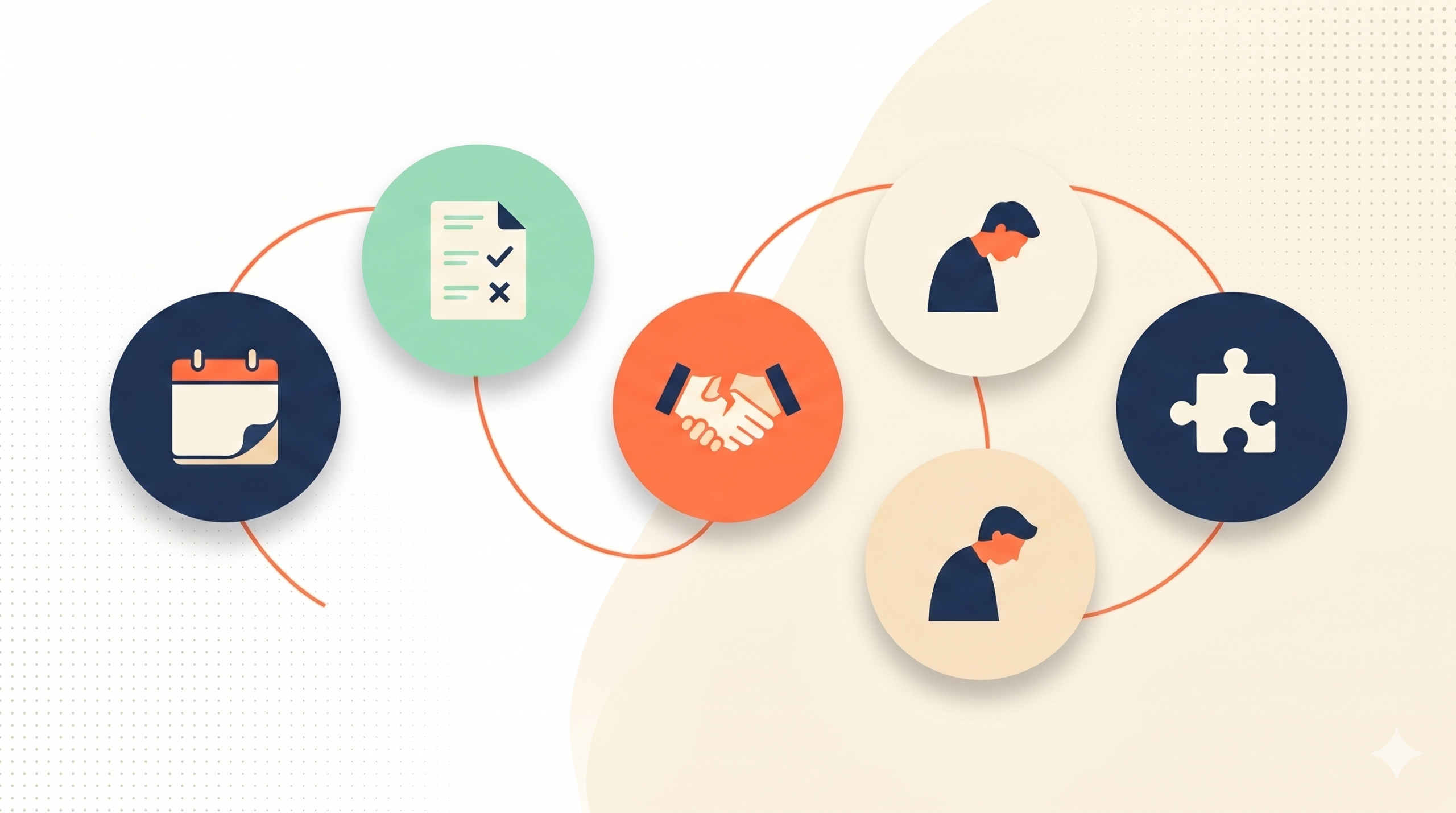
The skills gap is not a mystery. It is the predictable outcome of how the Indian education system was designed and how slowly it has adapted to a changed economy. Five structural causes do most of the work.
1. Outdated curriculum
The Indian curriculum, especially at the undergraduate level, updates slowly. By the time a syllabus has been drafted, debated, approved, printed, and rolled out across institutions, the industry has often moved one or two technology cycles ahead. A computer science syllabus written in 2018 and rolled out in 2021 will already feel outdated to a software employer hiring in 2026. The structural delay is the problem — not the individual faculty, who often know the material is dated but are bound by what they are required to teach.
2. Exam-focused assessment culture
Indian students are evaluated almost exclusively on what they can recall and reproduce under time pressure. This is a narrow definition of competence, and it shapes how students study. Why build a portfolio when no one is grading it? Why contribute to an open-source project when it does not add to your CGPA? The assessment system has trained an entire generation to optimise for tests rather than for ability, and the resulting graduates are sharper at tests than they are at workplace performance.
3. Weak industry-academia linkages
Most Indian colleges have limited continuous engagement with employers. Faculty rarely spend time in industry, industry rarely spends time in classrooms, and the formal mechanisms that exist — guest lectures, industry visits, board memberships — are often surface-level. Without strong linkages, colleges have very limited visibility into what skills employers are actually looking for. Curriculum decisions get made in a vacuum, and the skills gap is the result.
4. Rapid technology change
This factor is not unique to India, but it amplifies the effect of the other four. Industries are adopting AI, automation, cloud, and data tools faster than education systems anywhere in the world can adapt. A degree designed in 2022 cannot anticipate what 2026 employers will want, and the gap widens with each cycle. The deeper response to this is teaching learnability as a skill in itself — but that is a habit colleges rarely develop.
5. Geographic and demographic mismatch
Jobs cluster in metros — Bengaluru, Hyderabad, Delhi NCR, Mumbai, Pune, Chennai. Graduates come from every corner of the country. The geographic mismatch creates friction in matching candidates to opportunities, and tier-3 and tier-4 colleges often have far weaker industry exposure than their metro counterparts. Even when a student in a smaller city has the underlying potential, they often do not get the same employability support, signalling, or interview practice as a peer in a major city.
Who pays the price for the skills gap?
The skills gap touches everyone in the talent ecosystem, but the costs are unequally distributed.
Graduates pay first. They face longer job searches, lower starting salaries, more rejections, and a harder transition into their first role even after they land one. Many take jobs outside their field simply to start earning, which compounds the gap further because they never use what they studied.
Employers pay next. They spend longer hiring, invest more in onboarding, lose more first-year hires to attrition, and often have to absorb productivity losses while new joiners catch up. For IT services and BPO companies, fresher training costs are now a permanent line item.
Colleges and universities pay reputationally. Placement performance is increasingly central to how students, parents, and accreditation bodies evaluate institutions. Colleges that struggle to place students lose the next cohort’s enrolments. The pressure compounds.
The Indian economy pays at scale. A demographic dividend that should be powering growth ends up partially wasted. Productivity per worker stays lower than it could be. Investment in higher education does not translate into proportional returns. The World Bank and other international bodies have repeatedly flagged the macroeconomic significance of closing this gap. (For a broader view on how skills matter in emerging economies, see The World Bank’s work on jobs and human capital.)
How India is trying to bridge the gap
The Indian government and industry have not been passive. Over the last decade, a number of large-scale interventions have been launched to address the skills gap.
The National Education Policy 2020 is the most significant systemic reform. It pushes for multidisciplinary education, integrated vocational training, internships within degree programmes, outcome-based assessment, and stronger industry-academia linkages. These changes are real, but they will take a decade or more to show measurable effects at scale.
Skill India and the Pradhan Mantri Kaushal Vikas Yojana, run by the Ministry of Skill Development and Entrepreneurship, are major vocational training programmes that have trained millions of people in specific trades. They have had measurable impact in formal manufacturing, construction, and services, though the link to white-collar employability remains a work in progress.
Industry bodies like NASSCOM, CII, and FICCI have launched future-skills initiatives, particularly in AI, data, and cybersecurity, where the gap is most acute. These have been useful for working professionals more than for college graduates, but they have moved the conversation forward.
The honest assessment is that India is doing more than it ever has on this problem, and the trajectory is positive. But the gap is large and the system is large, and individual graduates cannot wait a decade for systemic reform to reach them. The most useful action sits at the level of the student, the college, and the recruiter — choices that can be made and changes that can be implemented within months, not years.
What colleges can do to close the gap on their campuses
For a college placement team or training and placement office, the highest-leverage shift is from “interview preparation” alone to a full job-readiness programme. The most effective campus interventions combine four moves.
First, run a structured employability assessment in the second year, not just in the final year. A psychometric and skills test like GroYouth’s GY SAT gives every student a clear, comparative read on where they stand on aptitude, personality fit, communication, problem-solving, and behavioural strengths. With that data, the college can build personalised improvement plans instead of running generic placement training for everyone.
Second, embed employability skill development into the curriculum, not as a one-off workshop. Communication, critical thinking, and applied digital fluency should be threaded through every semester. Industry-aligned projects, internships, open-ended problem statements, and graded group work all build employability faster than another lecture series.
Third, run AI-led mock interview programmes that measure communication and confidence, not just content. Tools like GY FIT give every student structured, repeatable practice with personalised feedback — at a scale a small placement team cannot match through human-only mocks.
Fourth, unify placement operations, candidate readiness data, and employer relationships in one system. A purpose-built campus placement management platform like GroYouth’s GY Campus brings these layers together and gives placement officers analytics on where each student stands, where intervention is needed, and which employers are the right fit for the strongest candidates. This is materially different from the spreadsheets and ad-hoc tools most colleges still rely on.
What graduates and students can do to bridge the gap themselves
System-level reform will not arrive in time for an individual graduate in their final year. The students who close the gap fastest are the ones who treat their own employability as a personal project, starting two to three years before graduation.
The first move is to get a structured external read on where you stand. Take a credible psychometric and skills assessment — GroYouth’s GY SAT is built for exactly this — and find out which of the eight core employability skills are your strongest and which are your weakest. Without this baseline, you will be guessing.
The second move is to build real-world experience deliberately, not opportunistically. Pick small projects in your field and finish them for a real audience. A portfolio website, an open-source contribution, a finance model published on LinkedIn, a marketing case study run for a local business. Real audiences provide real feedback, and real feedback is how applied skills get built.
The third move is to practice the workplace behaviours that exams do not measure. Join a public speaking group. Write a weekly piece on LinkedIn. Take feedback seriously and apply it visibly. Find a mentor through GY Coach. These slow-build skills only show up when you put yourself in situations that require them.
The fourth move is structured interview practice using AI-powered tools like GY FIT, so that by the time you walk into a real interview, your delivery is automatic and your confidence is calibrated, not performative.
How recruiters can adapt their hiring for the skills-gap reality
For recruiters and hiring leaders, the shift is from screening for interview performance to screening for job-readiness signals. A candidate who interviews well but is not job-ready will cost the company more in onboarding, attrition, and lost productivity than a candidate who interviews less polished but is genuinely employable.
The fix is layered hiring — psychometric and behavioural assessments before interview rounds, AI-led structured mock interviews to evaluate communication and confidence consistently across candidates, and richer candidate profiles that capture project work and applied skills in addition to academic scores. The GroYouth ecosystem brings these layers into one workflow, and the Recruitment Partner Program extends the same logic into external recruiter relationships, so smaller agencies and freelance recruiters can plug into the same readiness data.
How GroYouth fits into bridging India’s skills gap

GroYouth’s whole reason for being is the gap this article describes. The platform is built as five connected layers — assessment with GY SAT, counselling with GY Coach, AI interview practice with GY FIT, resume and profile strengthening with GY Assist, and verified employer access with GY Portal. Together they take a graduate from “I am preparing” to “I am ready”, with measurable signals at every stage.
For colleges, GY Campus brings the full readiness layer into the placement office, giving placement teams visibility, structured intervention tools, and stronger placement outcomes. For recruiters, the platform offers a stream of pre-screened, readiness-evaluated candidates who are likelier to perform in the role and stay in it.
The skills gap is a national problem, and no single platform will solve it. But the gap is also a personal problem that each graduate, each college, and each recruiter can take meaningful action on right now. GroYouth is built to make that action structured, measurable, and effective.
Take the GY SAT employability assessment →
Frequently asked questions
What is the skills gap in India?
The skills gap in India is the distance between the skills that Indian graduates leave college with and the skills that Indian employers actually need from new hires. It includes both hard-skill gaps (technical, digital, domain-applied) and employability gaps (communication, problem-solving, teamwork, adaptability, ownership). Research has consistently shown that only around half of Indian graduates are considered employable.
Why do Indian graduates struggle to get hired?
Indian graduates often struggle to get hired because of a combination of outdated curriculum, an exam-focused education system, weak industry-academia linkages, rapid technology change, and limited workplace exposure during their degree. As a result many graduates are strong on theory but weak on applied workplace skills, and that gap shows up most sharply during hiring.
What percentage of Indian graduates are employable in 2026?
Employability research from sources such as the India Skills Report and earlier studies by Aspiring Minds has consistently placed the share of employable Indian graduates between forty-five and fifty-five percent over the past decade. The exact number varies with methodology and year, but the broad picture has remained stable.
How can the skills gap in India be reduced?
The skills gap can be reduced through a combination of curriculum reform, project-based and applied learning, stronger industry-academia linkages, structured employability assessments, AI-led interview and communication practice, and personalised career counselling. Government initiatives like NEP 2020 and Skill India address it at the systemic level, while platforms like GroYouth address it at the individual and institutional level.
Which sectors face the largest skills gap in India?
The largest skills gaps in India in 2026 are in AI and machine learning, data science, cloud computing, cybersecurity, digital marketing, advanced manufacturing, and core IT services where fresh-hire training cycles remain long. White-collar sectors generally face a soft-skills gap, while emerging technology sectors face both a hard-skills and a soft-skills gap simultaneously.
What role does technology play in bridging the skills gap?
Technology plays a meaningful role on both sides of the gap. AI-led assessment platforms, mock interview tools, online courses, and structured career counselling systems all make personalised employability development possible at a scale that human-only methods cannot match. Platforms like GroYouth combine these technologies into one workflow so that students, colleges, and recruiters can address the gap in a connected way rather than piecemeal.